Fri 20 Mar 2026

Moving fast and fixing for the future.
"Move Fast and Fix Things," (Darren Jones’s recent speech at the IfG) is an exciting, if daunting, provocation to reinvent statecraft. The challenge: upgrade the machinery of state while the jet is in the air. A profound and familiar problem to the UK Policy Profession. But landing it nicely may be even harder than they think.
There is a tension between sustainability and speed. If we are going to move fast and fix things – and we can! – then, under the hood of ‘Digital Everything’, we must install an engine powered by the twin cores of sustainability and impact.
This requires precision engineering. The right skills. The right tools. The right behaviours. And fresh thinking, of course. Perhaps this is an opportunity to liberate our technocratic two-pizza teams from the shackles of Strategy, Policy and Delivery; maybe the Digital State will thrive on different disciplines.
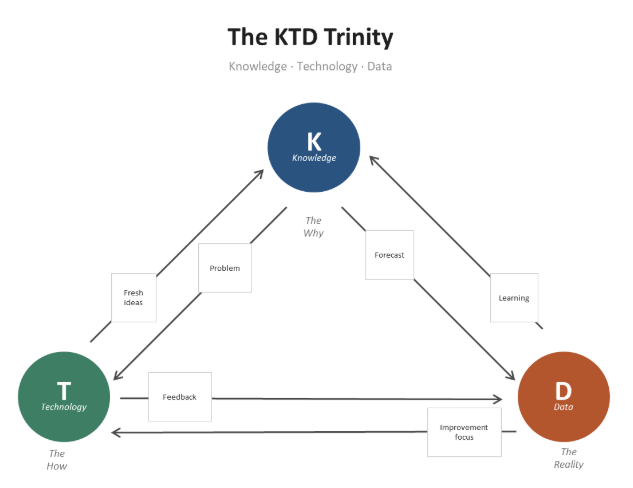
1. The Trinity of Sustainable Impact: Knowledge, Technology, and Data
Digital modernisation works when it has the right input from expert practice in three deeply interconnected fields. Experienced Civil Servants may recognise their work in these fields – and likely appreciate that each one is a piece of the same puzzle.
- Knowledge (Why): The intellectual firepower of the state is a synthesis of deep understanding, tacit insight and awareness of the shared purpose (including political) that gives the system its mission.
- Technology (How): The full system of contracts, hardware, code, legislation and interoperable infrastructure, which must stay tightly synchronised with Knowledge and Data, and resilient enough to adapt as the system learns from experience.
- Data (Reality): Tracks the rubber hitting the road: a real-time feedback mechanism that defines what the technology is intended to achieve and keeps the system (and the public) informed and confident about where interventions are heading.
2. Boring but Brilliant Alchemy: turning governance into confidence
If KTD disciplines are the macro, then we need to think about the micro skills next. To truly "fix things," we must fall deeply in love with the details: irreversible transformation will depend on boring things done brilliantly and for a long time.
The Minister wants to alleviate governance and give innovation room to breathe. For the Digital State to do this, it will need to appreciate the importance of doing the groundwork well. Maturity means mastering the unglamourous aspects here, and opens the state up to vast fields of transformative technological opportunity:
- Multi-Criteria Decision Making: Using the best data and analysis to address apparently incommensurable trade-offs fearlessly and with deep understanding of the (often complex) political narratives.
- Interoperable Systems: Creating a "core" with the connections and transparency to communicate quickly and openly, removing the need for 40 layers of approval before an innovation can cross verticals.
- High-Quality Frameworks: Highest quality recruitment, training, procurement and departmental coordination, where processes are focused on the outcomes that drive the system.
A state that gets these basics right has the potential to transform fragile accountability into solid confidence. Perhaps, in doing so, it can also design away some of the layers of authorisation that so often frustrate brilliant teams.
3. Sustainable Impact Design
In our Sustainable Impact Design course, we look at the modern skills required to achieve this precision engineering of the state.
Sustainable impact is anchored in analysis that can handle trade-offs between social, economic, and environmental goals from day one. Success means putting the analysis into practice, using skills that work across the KTD trinity, to create systems and solutions with the agility to test, learn and adjust as they solve the unsolvable problems.
Culture and mindset are of vital importance too: the systems are too big for one mind, or one team, or one organisation to hold the answers. It has been said many times that we must work openly and effectively with the world beyond Whitehall’s walls.
3. A Collaborative Mission
The Minister’s call to "Move Fast and Fix Things" invites our Civil Servants to become the technocratic anchor beings of mission-driven government. Success means involving great people from all corners of the state and society – a powerful community that encompasses the full breadth of innovation and implementation.
The conversation about the Digital State has already moved on to be about much more than faster computers and fresh applications. By adopting the KTD disciplines and practicing the skills of Sustainable Impact Design, we will not just keep up with the government’s appetite for change — we will be fuelling it.
To be part of this conversation, please join our policy forum on 21 st April, 10am -11am on MS Teams ‘Rewiring The State’ with Sue Owen (former Permanent Secretary) and Jake Love Soper (Dods Policy Associate) to discuss these issues and impact on civil service skills,
Contact Customer Service if you would like to attend: customer.service@dods-training.gov.uk
View all news